
Spartanburg County Arrest Records and Court Charges
Spartanburg County arrest records begin on the law-enforcement and detention side. They may connect to a sheriff incident report, warrant service, intake record, bond hearing, or jail booking. The Sheriff's Office links a Bookings Search from its home page, and the Detention Services page says current inmate and booked-and-released pages are intended to identify current jail inmates, including bail amounts and booking details. The booking portal did not return usable content during research, so exact fields such as mugshot, pod, charge code, or warrant number should not be promised without a live check.
Court charges after arrest are different. They are the allegations filed in court through a complaint, information, indictment, warrant, or related charging document. The 7th Circuit Solicitor represents the State in Spartanburg and Cherokee criminal cases filed by law enforcement. General Sessions criminal case records are kept through the Clerk of Court once a case reaches that level. A charge can be pending, amended, reduced, dismissed, or resolved by plea or trial. The full case file and final outcome belong in Spartanburg County criminal court records.
The Detention Services Division page was captured as a source for Spartanburg County arrest records and charges.
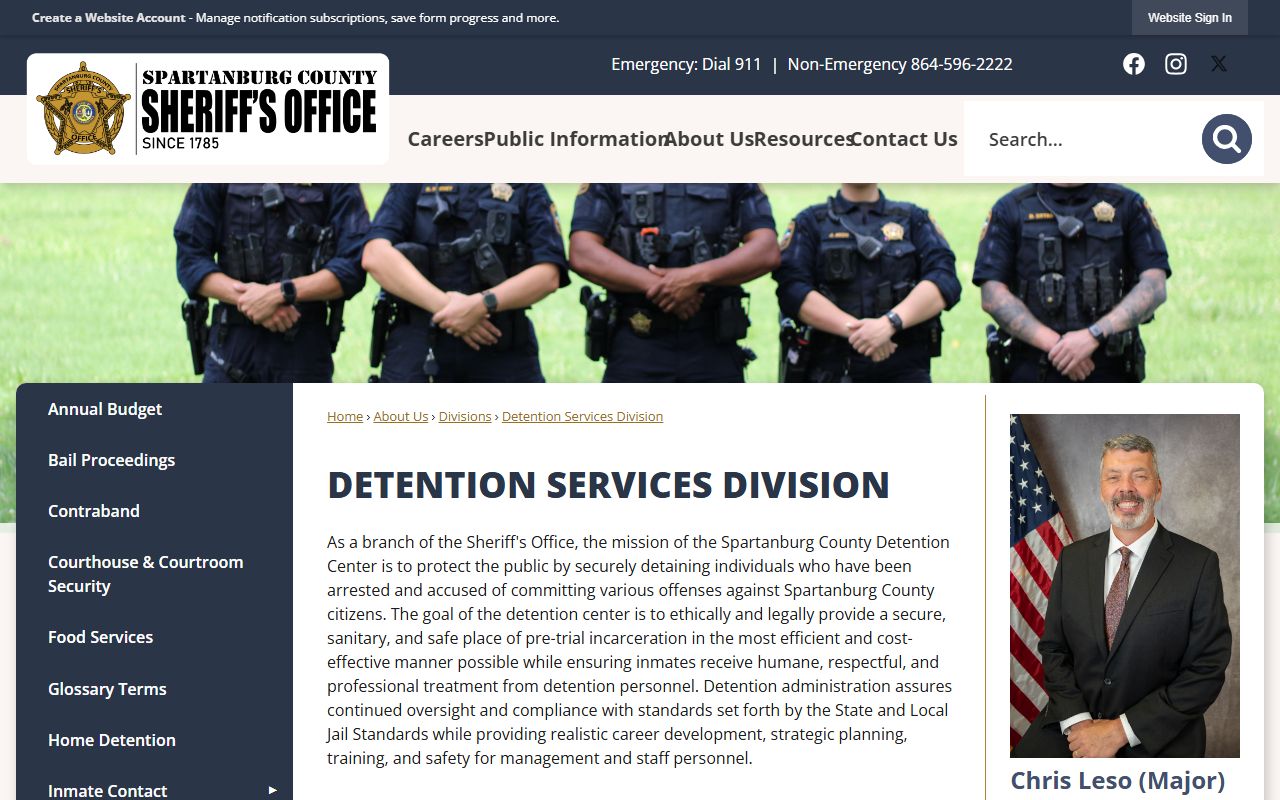
Use detention information as custody and booking context, not as proof of a conviction or final criminal history.
Find Spartanburg County Arrest Records and Charges
The practical search path depends on what part of the arrest-to-charge process is needed. For current custody, begin with the Sheriff's Bookings Search if reachable, then the Detention Center or Sheriff Records. For charges filed in court, use the South Carolina case-records landing page and the Spartanburg Public Index when the state app is available. That state access path needs cookies and JavaScript, and case detail may require a pop-up exception. For warrants, use the Sheriff's Warrant Division and the issuing court. For police reports, use Sheriff Records, City Police Records, or county FOIA as appropriate.
- Start with the custody source if the question is current jail status, bond, or booking.
- Use the state case-records search and Spartanburg Public Index for formal court charges and case status.
- Check Magistrate Court, Municipal Court, General Sessions, or Family Court based on the issuing court or warrant type.
- Contact Sheriff Records for sheriff reports or official law-enforcement records not posted online.
- Use the Clerk of Court for certified General Sessions copies and the Solicitor for many expungement or prosecution-status questions.
The county Detention Center contact page was another successful image source for this page.
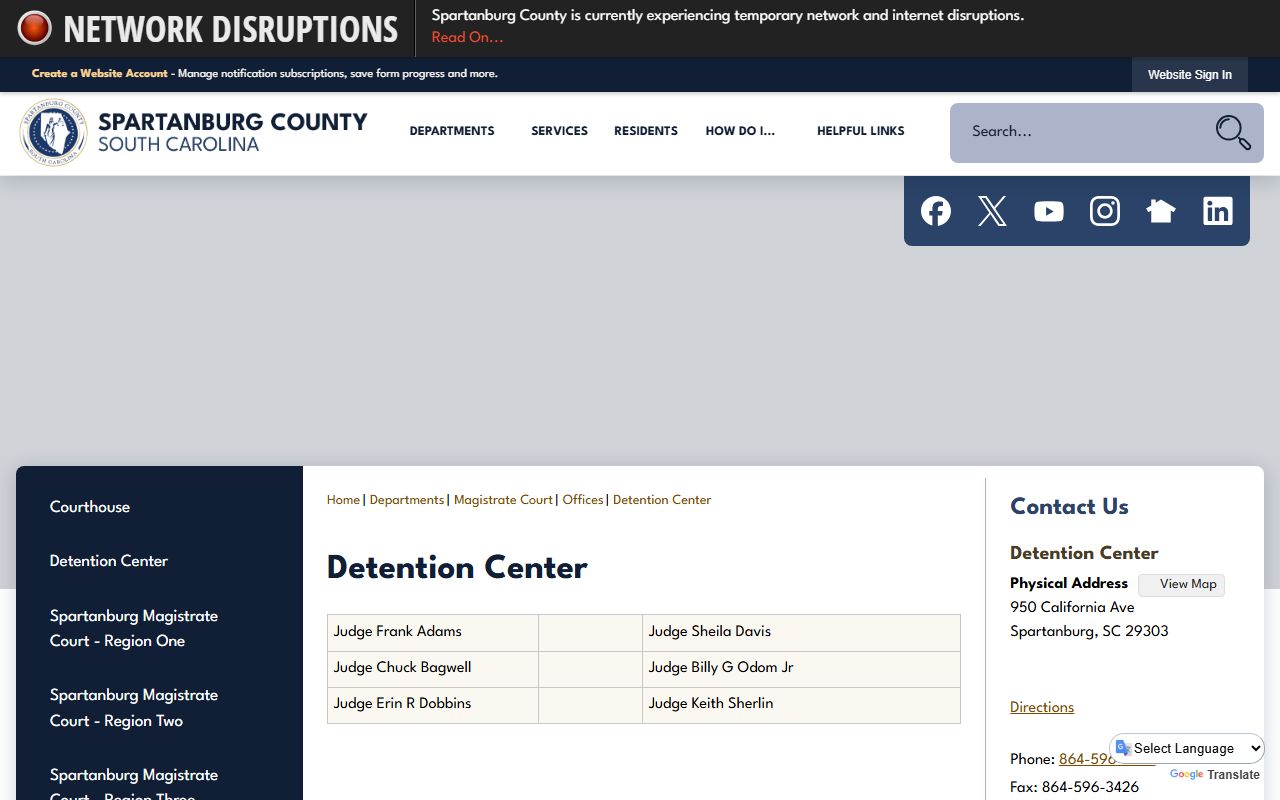
The Detention Center is the better contact for current custody questions, while court offices control filed charge records and certified copies.
Charging Documents After Spartanburg County Arrests
Charges after arrest can enter the court record through several document types. The terms are often used broadly by non-lawyers, but the practical point is the same: the court charge record begins when a formal accusation is filed or acted on by the correct court. A complaint or warrant may appear in lower-court or intake activity. An indictment is tied to grand-jury action for serious matters. An information is a prosecutor-filed charging document used in some criminal procedures.
| Charging Document | Who Uses It | What It Means for the Record |
|---|---|---|
| Complaint | Law enforcement, prosecutor, or summary court process. | Starts or supports a lower-court criminal accusation and may appear with warrant or bond activity. |
| Information | Solicitor or prosecutor. | States the prosecutor's formal charge without relying on a grand-jury indictment in the same way. |
| Indictment | Grand jury and Solicitor process. | Formal charging document for serious General Sessions matters and a key case-file record. |
A person can be arrested before the full court charge record is visible online. Bond Court or Magistrate Court information may appear first. Later, the General Sessions record can show the formal charges, amendments, pleas, disposition, and sentence.
Spartanburg County Charge Status Table
Charge status changes as the case moves. A charge listed at booking may not be the final charge filed in court. The Solicitor may amend, reduce, add, dismiss, or decline to pursue a charge. The court may enter a disposition after plea, trial, dismissal, or other resolution. Read each charge line and the final disposition before treating the record as a conviction.
| Status | What It Means | Where to Verify |
|---|---|---|
| Pending | The charge is still open or no final disposition is shown. | Public Index, Clerk, Solicitor, or issuing court. |
| Amended | The charge wording, count, statute, or offense level changed. | Docket entries, charging document, or court order. |
| Reduced | The case moved to a less serious charge or lower offense level. | Plea entry, Solicitor record, or disposition. |
| Dismissed | The court or prosecutor ended the charge. | Disposition field or dismissal order. |
| Nolle Prosequi | The prosecutor chose not to pursue the charge. | General Sessions disposition or Solicitor confirmation. |
| Convicted | A guilty plea or verdict was entered. | Disposition, sentencing entry, and certified court record. |
The Sheriff intake information page was assigned to this record type.
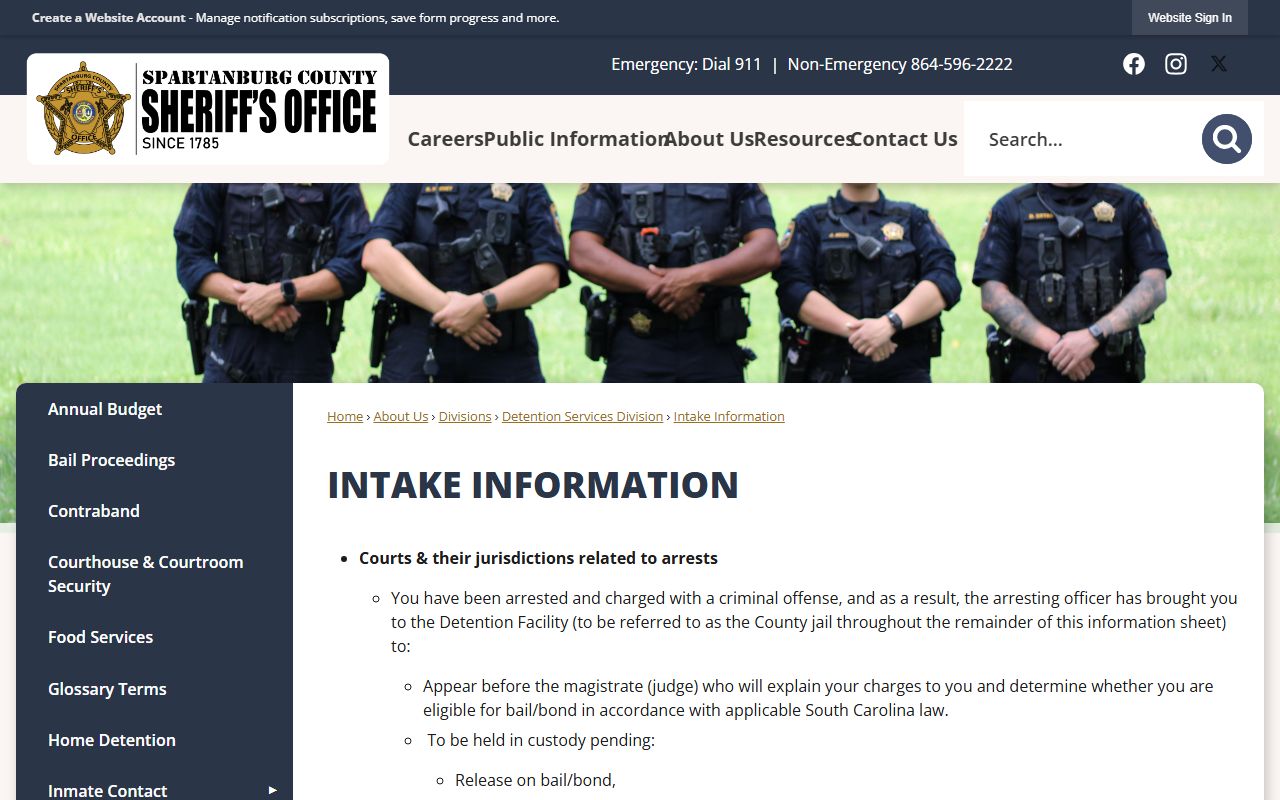
Intake and warrant-type information helps explain the early custody side before court charge status is finalized.
Statewide Charge and Custody Checks
South Carolina research did not identify a single public statewide charge-search portal that replaces Spartanburg County court and sheriff channels. State tools serve narrower purposes. SCDC public inmate search covers sentenced state-prison inmates as of the prior midnight and excludes county jail inmates, released offenders, probation or parole supervision, juvenile offenders, and SCDC fugitives. VINE and VINELink support custody-status notifications. SLED SORT is the sex offender registry, not a full criminal-charge lookup.
| State Source | Best Use | Limit |
|---|---|---|
| SCDC public inmate search | Sentenced state-prison custody after transfer from county jail. | Does not cover Spartanburg County jail inmates or released offenders. |
| VINELink South Carolina | Custody-status notifications by app, phone, email, text, or TTY where available. | Notification tool, not a court charge record. |
| SLED SORT | Registered sex offender search, maps, aliases, and listed convictions. | Registry scope only, not a complete criminal history. |
| Public Index | Trial-court charges, dockets, dispositions, and case status when public. | Can be delayed, disrupted, or restricted by court rules. |
Spartanburg research found no confirmed standalone public sheriff app with jail or warrant lookup. The county and civic apps identified during the sweep did not show captured jail or warrant features.
Charges vs Convictions After Arrest
A Spartanburg County arrest record can show an arrest and alleged offense without proving guilt. A court charge record can show that an accusation was filed without proving conviction. The conviction question turns on the final disposition and sentence. This distinction is especially important where a charge was dismissed, not prosecuted, amended, or expunged.
| Point | Charge | Conviction |
|---|---|---|
| Meaning | An allegation or formal accusation after arrest or warrant action. | A final finding of guilt by plea or verdict. |
| Timing | Can appear at booking, intake, warrant, Magistrate, Municipal, or General Sessions stages. | Appears after court resolution and sentencing. |
| Can change | Yes, charges can be amended, reduced, dismissed, or not prosecuted. | The conviction can later be appealed, corrected, pardoned, or expunged only if law allows. |
| Best proof | Charging document, docket, or court case detail. | Certified disposition or sentence from the court custodian. |
The Sheriff bail proceedings page connects arrest, bond, custody, and later court appearances.
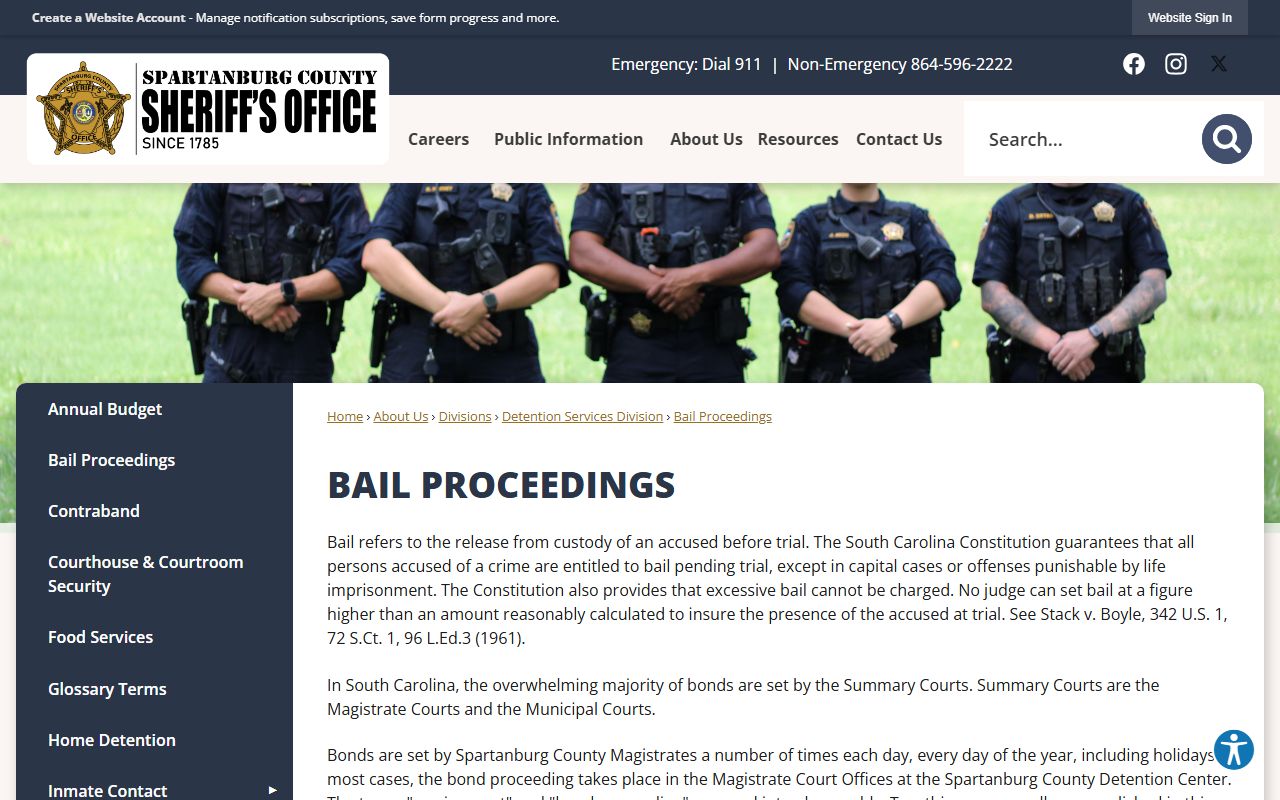
Bond information may be available before the final charge disposition appears in the court case record.
Local Charge Resolution Programs
Some Spartanburg County charges may resolve through local specialty or diversion paths instead of a simple guilty, not guilty, or dismissal pattern. The 7th Circuit Drug Court is a criminal-justice diversion program for nonviolent offenders whose crimes support alcohol or drug addictions. Participants plead guilty, receive a suspended prison sentence, and enter a structured program with court appearances, drug screens, treatment sessions, and support-group meetings.
The 7th Circuit Mental Health Court was established within the Solicitor's Office for Spartanburg and Cherokee counties by a South Carolina Supreme Court order dated September 3, 2024. It covers qualifying misdemeanor and nonviolent felony defendants with diagnosed or diagnosable mental illness. City of Spartanburg Homeless Court is a voluntary Municipal Court program for people who were homeless when charged or are currently homeless, with treatment or rehabilitation plans that can lead to dismissal of fines and sometimes dismissal of the offense.
Note: A specialty-court entry can affect charge status, but the final disposition still belongs in the court record.
Warrants and Prosecutor Charge Decisions
The Sheriff's Warrant Division handles follow-up investigations of active warrants, bench warrants, Family Court warrants, and General Sessions bench warrants in Spartanburg County. Warrant types noted in the research include arrest warrants, Magistrate bench warrants, General Sessions bench warrants, Family Court bench warrants, municipal warrants, court-order violations, federal offenses, probation or parole violations, and fugitive-from-justice warrants. No verified searchable official public active-warrant list was found, so phone and court contact remain key.
The 7th Circuit Solicitor is the prosecutor for state criminal cases in Spartanburg and Cherokee counties. The Solicitor's role is not the same as the Sheriff, Clerk, or Public Defender. Sheriff records may document the incident or arrest. The Clerk keeps the court file. The Solicitor decides or manages prosecution choices and diversion or expungement programs. The Public Defender represents qualifying defendants and does not handle civil matters such as divorce, child support, or landlord-tenant disputes.
7th Circuit Solicitor
180 Magnolia St, 5th Floor, Suite 5108
Spartanburg, SC 29306
864-596-2575
8:30 a.m.-5:00 p.m. Monday-Friday
Sheriff Records for Spartanburg County Arrest Records
Sheriff Records is the practical channel for sheriff police reports and official sheriff records. Requesters should gather the case number, incident date, person or people involved, and nature of the incident before calling or making a request. Sheriff Records hours are Monday-Thursday 8:30 a.m.-5:00 p.m. and Friday 8:30 a.m.-4:00 p.m.; the records phone is 864-503-4550. Formal county public-record requests can also use Spartanburg County FOIA when a sheriff or county record is not otherwise available.
The Sheriff Records Section page was captured for Spartanburg County arrest records and court charge research.
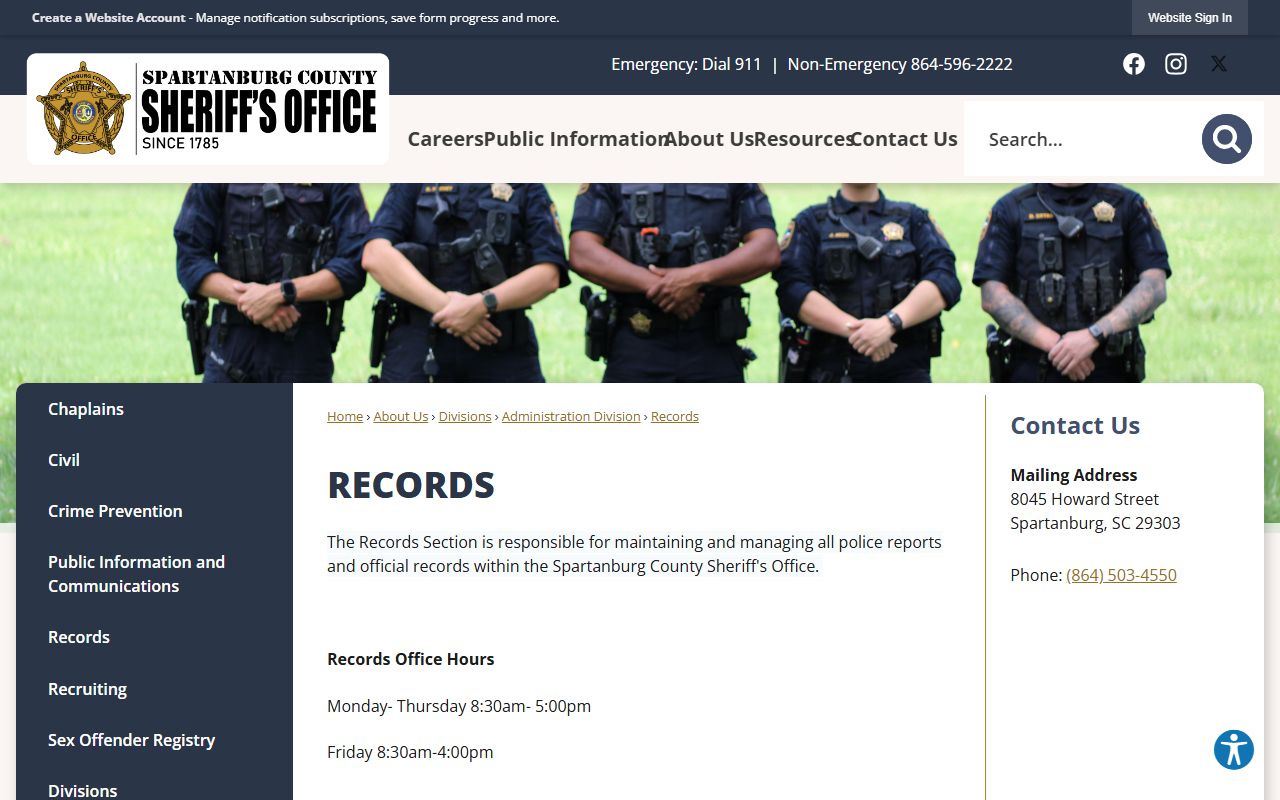
Use Sheriff Records for law-enforcement reports, then the Clerk or court for filed charge records and certified case copies.
Sealed and Expunged Arrest Records
Sealing and expungement are not the same. A sealed record is hidden from ordinary public access by law or court order. An expunged record is removed, sealed, or destroyed under South Carolina's expungement process. Judicial Branch guidance describes expungement as applying to qualifying criminal charges, convictions, or records tied to arrest, charge, or conviction. For many General Sessions and juvenile matters, the applicant generally starts with the solicitor in the circuit where the offense occurred.
| Point | Sealed | Expunged |
|---|---|---|
| Public access | Hidden or limited by court order, statute, or rule. | Removed, sealed, or destroyed from public access after processing. |
| Common examples | Juvenile, adoption, protected, or court-sealed matters. | Eligible non-convictions, summary matters, juvenile matters, or other records allowed by law. |
| Local path | Ask the court that controls the file. | Start with the 7th Circuit Solicitor for many General Sessions and juvenile records. |
| Verification | Confirm with the Clerk or issuing court. | Confirm the order reached the Clerk, SLED, and arresting agency. |
The South Carolina expungement statutes were assigned to the court arrest and charge record page.
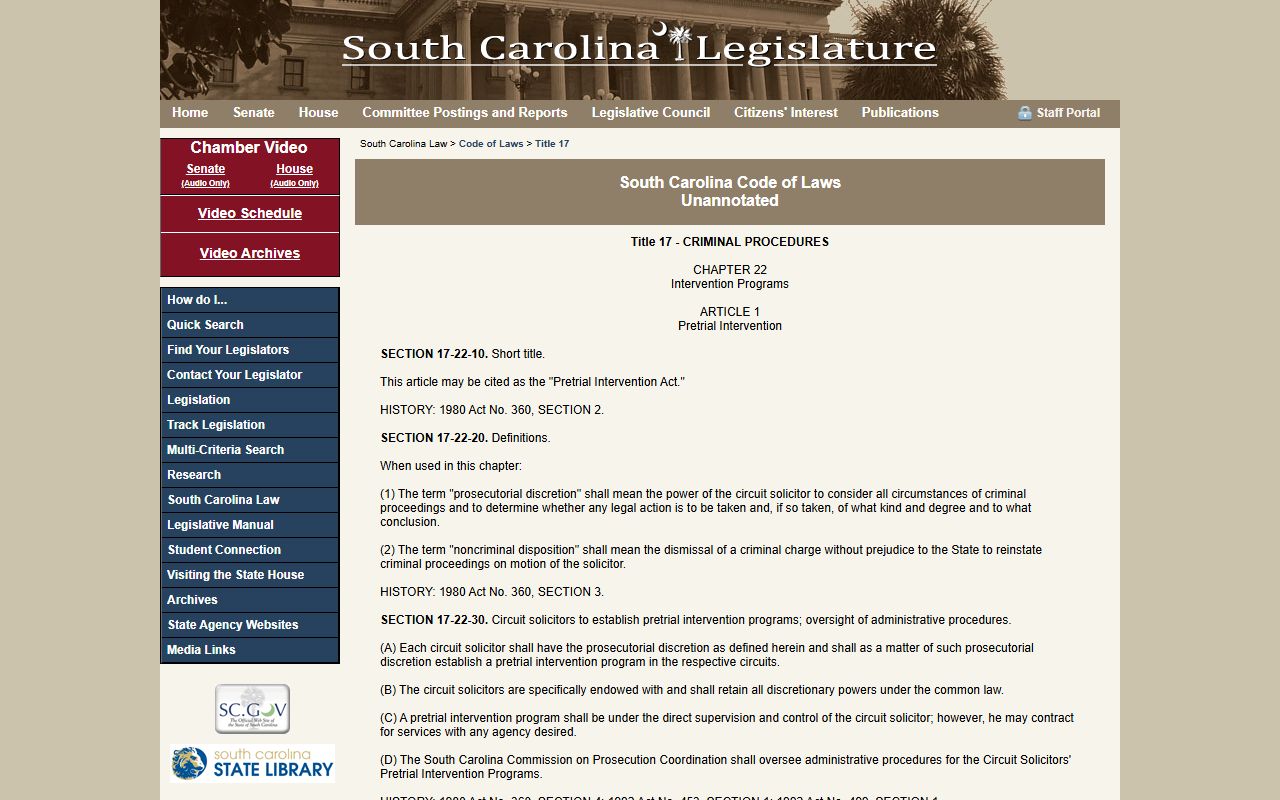
After an expungement order, the person should verify that every agency processed the order and that public systems updated.
Restricted Spartanburg County Arrest Records
Juvenile records, adoption records, sealed matters, expunged records, mental-health commitment materials, protected personal identifiers, and some law-enforcement investigation materials are restricted. South Carolina FOIA allows exemptions for active or prospective law-enforcement proceedings, privacy, confidential sources, investigative methods, and safety risks. Public Index home addresses no longer display as of January 1, 2026. Rule 41.2 also requires filers to redact sensitive personal identifiers, but clerks do not review every filing for compliance.
The same arrest can appear differently across systems. A jail roster entry can change quickly. A warrant can be active before a General Sessions case exists. A Public Index charge line can lag behind a prosecutor's amendment. A dismissal or expungement may need time to update. Treat each source as one part of the process and verify final court outcomes through the official court custodian.
Important: Booking data, warrant information, and charge records are not the same as a certified conviction record.